
Breakthrough in Synthetic Kidneys
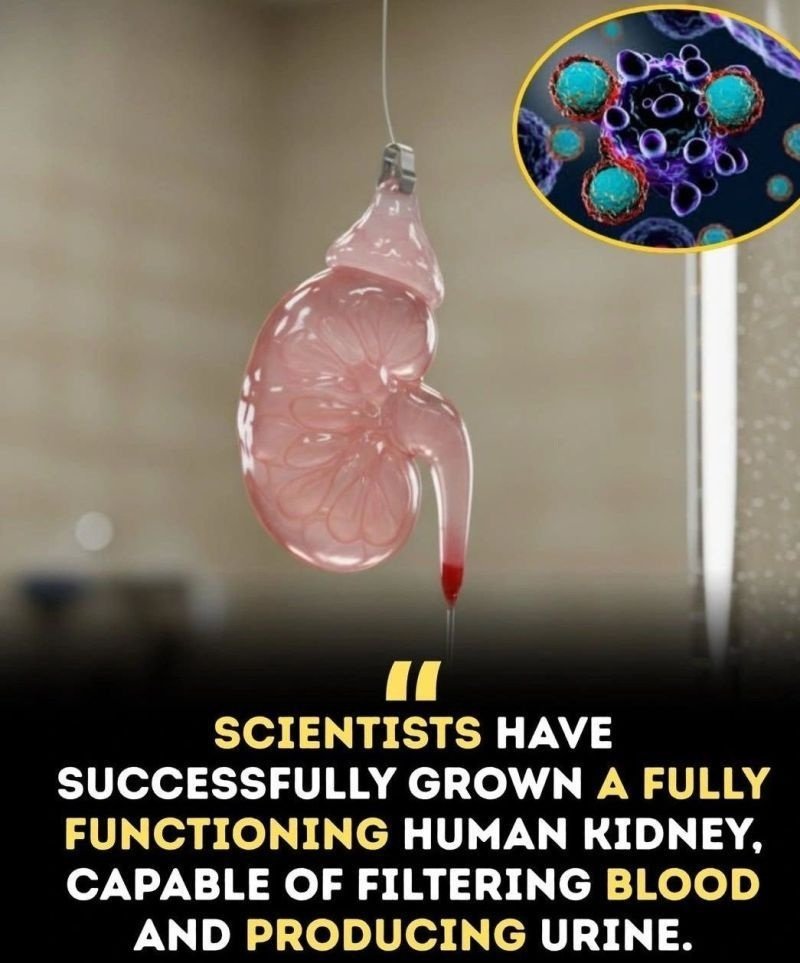
Breakthrough in Synthetic Kidneys: How Kidney Assembloids Are Transforming the Future of Organ Transplantation
Introduction
The global healthcare industry is witnessing revolutionary innovations in Regenerative Medicine, and one of the most exciting breakthroughs is the development of synthetic kidneys using assembloids. Scientists have recently taken a major step toward building functional lab-grown kidneys that can replicate the natural functions of human kidneys.
Researchers at the Keck School of Medicine of USC have successfully created advanced kidney structures called assembloids, which combine multiple kidney components to mimic real organ function.
The research, published in Cell Stem Cell, represents a major milestone in medical science. It not only improves our understanding of kidney diseases but also brings the world closer to creating fully functional synthetic organs for transplantation.
For millions of patients suffering from kidney failure, this innovation could change the future of healthcare.
Understanding Kidney Disease: A Global Health Challenge
Kidney disease is one of the most common chronic health conditions affecting people worldwide. According to global health studies, one in seven adults may develop kidney disease during their lifetime.
The most severe stage is known as End-Stage Kidney Disease, where the kidneys lose their ability to filter blood and remove waste from the body.
Patients with advanced kidney failure typically require:
Dialysis treatment
Kidney transplantation
However, the shortage of donor organs remains a serious global issue.
For example, in the United States alone, more than 100,000 patients are currently waiting for a kidney transplant, making kidneys the most demanded organ for transplantation.
The development of lab-grown kidneys could dramatically reduce transplant waiting lists and save millions of lives.
What Are Kidney Organoids?
Before understanding assembloids, it is important to understand Kidney Organoids.
Kidney organoids are small, simplified versions of kidneys grown in laboratory conditions using stem cells.
These organoids mimic certain biological features of real kidneys and allow scientists to study:
Kidney development
Disease progression
Drug responses
However, traditional organoids have limitations.
Most organoids only develop to an embryonic stage and cannot fully reproduce the complexity of a mature kidney.
To overcome these limitations, scientists developed assembloids.
What Are Kidney Assembloids?
Assembloids are advanced biological models created by combining multiple organoid components to simulate real organ structures.
In the case of kidney assembloids, researchers combined two essential kidney components:
1. Nephrons
Nephrons are microscopic structures responsible for filtering blood and removing waste.
Each human kidney contains around one million nephrons.
2. Collecting Ducts
Collecting ducts help concentrate urine and transport it from the kidney to the bladder.
By integrating these two components, scientists created a more complex and realistic kidney model that behaves closer to a real organ.
The Research Breakthrough
The study was led by Zhongwei Li, Associate Professor of Medicine and Stem Cell Biology at the Keck School of Medicine of USC.
Researchers from the Li Lab collaborated with scientists from Tongji University to conduct this groundbreaking research.
The research team included scientists:
Biao Huang
Pedro Medina
Zipeng Zeng
Jincan He
Together, they successfully created mouse and human kidney assembloids that demonstrate advanced structural and functional development.
How Scientists Built the Synthetic Kidneys
The process of creating kidney assembloids involves several advanced scientific techniques.
Step 1: Growing Kidney Progenitor Cells
Researchers started by cultivating kidney progenitor cells, which are early-stage cells capable of developing into different kidney tissues.
Step 2: Creating Nephron and Collecting Duct Organoids
The scientists generated two separate organoid types:
Nephron organoids
Collecting duct organoids
Each component represents a critical part of kidney function.
Step 3: Assembling the Components
The two organoid types were combined to form assembloids, which replicate the spatial structure of a developing kidney.
Step 4: Transplantation into Mice
To promote natural maturation, the assembloids were transplanted into living mice.
Inside the living environment, the assembloids:
Grew larger
Developed blood vessels
Formed connective tissues
Became more biologically active
The natural environment helped the cells self-assemble into more advanced kidney structures.
Functional Capabilities of Kidney Assembloids
One of the most exciting findings from the research is that the assembloids demonstrated real kidney-like functions.
The synthetic kidney structures were able to:
Blood Filtration
The assembloids could filter blood, one of the main functions of kidneys.
Protein Uptake
They showed the ability to absorb proteins such as albumin, an essential function of kidney filtration.
Hormone Production
The synthetic tissues were capable of secreting certain kidney-related hormones.
Early Urine Formation
Scientists observed early signs of urine production in the assembloids.
These capabilities represent a major advancement compared to earlier organoid models.
Achieving Higher Levels of Organ Maturity
Previous kidney organoids could only develop to an embryonic stage, limiting their usefulness.
However, the new assembloids achieved significantly higher levels of development.
Mouse Assembloids
The mouse kidney assembloids matured to a level comparable to newborn mouse kidneys.
This was confirmed through gene activity and structural benchmarks.
Human Assembloids
Human kidney assembloids also matured beyond the embryonic stage.
Although exact comparisons are difficult due to the lack of newborn human kidney samples, the results demonstrate substantial progress.
Studying Complex Kidney Diseases
Another major advantage of assembloids is their ability to model complex diseases.
Researchers tested this by studying Autosomal Dominant Polycystic Kidney Disease.
This condition occurs due to mutations in the PKD2 gene, causing large cysts to form in the kidneys.
To study the disease, scientists created assembloids using cells with a defective PKD2 gene.
The results were remarkable.
The diseased assembloids developed:
Large kidney cysts
Inflammation
Tissue fibrosis
These complex disease features were previously impossible to replicate accurately in laboratory models.
This makes assembloids a powerful new tool for kidney disease research and drug development.
Benefits of Synthetic Kidney Research
The development of kidney assembloids offers several important benefits for healthcare and medical research.
1. Better Disease Models
Scientists can now study kidney diseases in highly realistic biological environments.
2. Faster Drug Discovery
Pharmaceutical companies can test medications on lab-grown kidney tissues before human trials.
3. Reduced Animal Testing
Synthetic organs reduce the need for traditional animal testing.
4. Progress Toward Organ Replacement
Most importantly, the research brings us closer to lab-grown kidneys for transplantation.
The Future of Lab-Grown Organs
Although fully transplantable synthetic kidneys are still under development, experts believe that regenerative medicine will transform healthcare in the coming decades.
Future possibilities may include:
Fully functional lab-grown kidneys
Personalized organs created from patient cells
On-demand organ manufacturing
Advanced disease models for research
These innovations could dramatically improve survival rates for patients with organ failure.
What This Means for Healthcare Professionals
For doctors, hospitals, and healthcare recruiters, these scientific advancements will create new medical specialties and career opportunities.
Fields expected to grow rapidly include:
regenerative medicine
transplant surgery
stem cell therapy
biomedical engineering
clinical biotechnology
Healthcare organizations will increasingly need specialized doctors and researchers trained in these advanced technologies.
The Role of Healthcare Recruitment
As the medical industry evolves, healthcare recruitment companies play a critical role in connecting hospitals with highly qualified professionals.
Organizations like Adis India Placement Pvt. Ltd. help healthcare institutions find skilled specialists including:
nephrologists
transplant surgeons
researchers
biotechnology experts
Recruitment agencies ensure that hospitals can access the talent needed to adopt emerging medical technologies.
Conclusion
The development of kidney assembloids represents a major milestone in the field of regenerative medicine.
By combining nephron and collecting duct organoids, scientists have created the most advanced synthetic kidney structures ever produced.
This research not only improves our ability to study kidney diseases but also moves us closer to a future where lab-grown kidneys could replace organ transplantation waiting lists.
Although challenges remain, the progress achieved by scientists at the Keck School of Medicine of USC provides hope for millions of patients suffering from kidney failure.
The future of medicine may soon include engineered organs that can save lives and transform healthcare worldwide.
